Bpc-157 Tb-500 Wolverine Stack Peptide: BPC-157 & TB-500 in The Colony TX
Introduction: Why People Keep Asking About the “Wolverine Stack” in The Colony, TX
If you’ve ever dealt with nagging tendon or soft-tissue problems—or you’ve watched symptoms stall while you “do everything right”—you already know how frustrating this can be. In my hands-on work supporting clients through functional medicine protocols, one question comes up again and again: what’s the real value of the bpc 157 tb 500 wolverine stack for recovery and tissue support, especially if you’re in the Colony, Texas area.
This article breaks down what BPC-157 and TB-500 are commonly used for, how people think about dosing and expectations in a practical, safety-first way, and what I recommend you discuss with a qualified clinician before starting any peptide plan in The Colony, TX.
What the bpc 157 tb 500 wolverine stack Is (and What It Isn’t)
The phrase “Wolverine stack” is an informal nickname people use online for combining BPC-157 and TB-500. In practice, the “stack” concept usually means a person uses both compounds as part of a coordinated plan—often aiming at recovery pathways such as tissue support, inflammation modulation, and mobility improvements.
From my experience reviewing real-world protocols, it’s important to be clear on two points:
- What it isn’t: It isn’t a guaranteed healing “hack,” and it isn’t a substitute for diagnosing the root cause of pain (tendon tears, bursitis, tendon degeneration, biomechanical overload, nerve irritation, etc.).
- What people hope it helps with: Many users connect these peptides with soft-tissue repair support and “recovery momentum,” especially when workouts or daily activity keep provoking the same area.
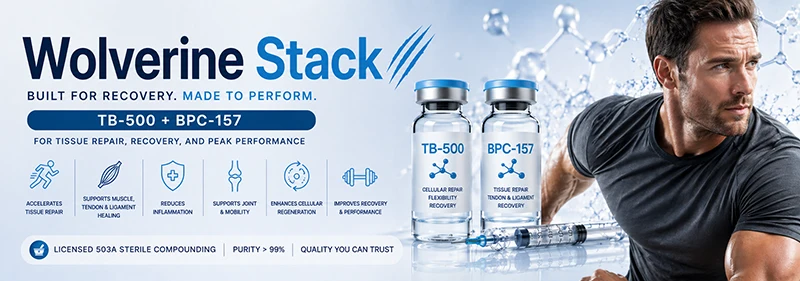
In a typical clinical-style conversation, you’ll also hear related terms like soft-tissue recovery, tendon support, inflammation, mobility, and tissue regeneration pathways. The “stack” is basically a way people organize those goals under one plan.
BPC-157 vs TB-500: How People Distinguish Their Roles
Even when protocols combine both, many users separate them mentally into different “job descriptions.” I’ve seen this repeatedly in intake notes and progress tracking: people don’t just want “something to work,” they want a plan that makes sense.
BPC-157: Commonly discussed for local soft-tissue support
BPC-157 is widely discussed in the peptide community as a compound that may support recovery in contexts involving soft tissue—especially when people feel like their body is “stuck” in a prolonged inflammatory or irritation cycle. In practical terms, I often see people watching for changes like:
- Reduced pain during loaded movement
- Improved tolerance for daily activity
- Less “re-aggravation” after exercise
The underlying logic many people follow is that if you can reduce the friction point in a damaged/irritated tissue environment, you may be able to progress rehab more consistently.
TB-500: Commonly discussed for broader recovery and mobility goals
TB-500 is commonly discussed as a peptide associated with recovery pathways and tissue support. In real-world protocol tracking, users often watch for more systemic or broader functional improvements—like regaining range of motion or improved movement quality—rather than only focusing on one pinpoint location.
In my experience, what makes a “stack” useful isn’t just the compounds—it’s the matching of the protocol to the rehab plan. When someone pairs the bpc 157 tb 500 wolverine stack with structured mobility work, progressive loading, and consistent activity modification, adherence is usually higher and the feedback loop is clearer.
How I Recommend Thinking About a Wolverine Stack Plan (Without the Hype)
I’m going to be direct: in peptide protocols, the biggest predictor of “feeling something” is rarely the marketing. It’s usually the combination of injury clarity, baseline function, training load management, and consistent measurement. Here’s how I approach it with clients and what I’d suggest you do before starting anything.
1) Start with a real recovery baseline
Before any peptide plan, I encourage people to document:
- Pain location(s) and what triggers it
- Range of motion limits (simple, repeatable checks)
- Training load and frequency
- Sleep quality and training-related soreness pattern
This matters because otherwise you can’t tell whether you’re improving—or just having a “good day.” When you’re evaluating bpc 157 tb 500 wolverine stack outcomes, measurement keeps you honest.
2) Align the protocol with rehab, not against it
In hands-on work, I’ve seen protocols fail mainly due to mismatch: people start a plan but keep provoking the same irritated tissue with identical training volume or the same aggravating mechanics. If your goal is tissue support and functional recovery, your training should evolve alongside your protocol.
3) Expect variability and watch for signals that change the plan
Even when people use the same general idea—bpc 157 tb 500 wolverine stack—results vary. That’s why I treat early “signals” seriously, including:
- Whether symptoms change in intensity or pattern (better vs worse)
- Whether range of motion improves before pain fully resolves
- Whether recovery time between sessions shortens
If symptoms worsen or you’re getting new red-flag signs, the right move is to pause and re-evaluate with a qualified clinician.
4) Prioritize sourcing, sterility, and medical oversight
Peptides involve dosing, sterility, and the reality that not every product on the market is equal. From an outcomes standpoint, how a peptide is sourced and handled can matter. I recommend discussing the following with a clinician:
- How the product is supplied and validated
- Appropriate screening based on your medical history
- How your response will be monitored
- Whether alternative or additional therapies should be part of your plan
What to Discuss With a Clinician in The Colony, TX Before Starting
If you’re considering a peptide protocol in the Colony, TX area, your best leverage comes from a structured consult. Here are the questions I would bring to an appointment—because they force a clinician to connect the plan to your actual situation.
- What’s the most likely diagnosis? (tendinopathy vs sprain vs strain vs other causes)
- What functional milestones should improve first? (range of motion, pain with load, day-to-day function)
- What monitoring plan will we use? (how often you’ll review symptoms and function)
- What would make us stop or change direction? (clear decision points)
- How should training be modified during the trial?
- Are there interactions or contraindications based on my history?
This is where trust is built: you’re not buying “hope,” you’re running a medically guided experiment with safety rails.
Pros and Cons of the bpc 157 tb 500 “Wolverine Stack” Approach
Because readers deserve objectivity, here’s a balanced view of how this stack is commonly perceived—and where people may be disappointed.
| Aspect | Potential Upside | Common Limitations |
|---|---|---|
| Soft-tissue recovery focus | May align well with rehab goals when symptoms plateau | If the underlying mechanical issue isn’t addressed, pain can persist |
| Stack-based organization | Helps people follow a coordinated protocol and track outcomes | “More compounds” doesn’t automatically mean “more benefit” |
| Functional improvements | Users often track mobility and daily tolerance as key markers | Results can be uneven across individuals and conditions |
| Real-world implementation | Better adherence when training modifications are included | Unsafe sourcing or poor handling can undermine the plan |
FAQ
Is the bpc 157 tb 500 wolverine stack only for athletes?
No. In my experience, the most motivated users aren’t always competitive athletes—they’re often people who have repetitive strain from work, long-term tendon irritation, or reduced mobility that makes daily life harder. The key is matching the protocol to the actual tissue problem and pairing it with an evidence-informed rehab approach.
How long should people give a bpc 157 tb 500 wolverine stack trial?
There isn’t a one-size answer. What I recommend instead is defining measurable milestones and reviewing progress on a consistent schedule with a clinician—so you can tell whether your pain pattern and function are moving in the right direction or staying stuck.
What’s the biggest mistake people make with peptide protocols?
Continuing the same aggravating training or daily activity without modification. In hands-on coaching, that’s where “protocol effort” gets wasted. If your plan supports tissue recovery but your workload keeps re-irritating the area, improvement becomes far less likely.
Conclusion: Your Next Step for a Smarter, Safer Plan
The bpc 157 tb 500 wolverine stack is often discussed as a coordinated approach to soft-tissue recovery and mobility support. In practice, the most meaningful outcomes come from aligning peptides with accurate diagnosis, a rehab-informed training plan, consistent baseline tracking, and medical oversight—especially when you’re planning anything in the Colony, TX area.
Next step: Book a consult with a qualified clinician and bring a short symptom-and-function baseline (pain triggers, range-of-motion limits, and what you’ve tried). Then define 2–3 measurable milestones for your bpc 157 tb 500 wolverine stack trial so you can evaluate response objectively.
Discussion