Bpc 157 10mg Reconstitution Calculator how much water to add to 10mg bpc 157 Peptide Dosage Calculator ( Reconstitution)
Introduction: getting your bpc 157 10mg reconstitution calculator right
If you’ve ever had to reconstitute BPC-157 from a 10 mg vial, you already know the pain: a small measurement error can snowball into the wrong daily dose, the wrong volume per injection, and a lot of wasted peptide. In my hands-on work setting up reconstitution workflows for peptide users, the most common issue wasn’t “math”—it was inconsistency (different syringes, different mixing habits, and forgetting that concentration determines everything downstream). This guide explains exactly how to use a bpc 157 10mg reconstitution calculator approach, so you can confidently calculate how much water to add and what volume you’ll draw later.
Important context: I’ll focus on the dosage math and reconstitution logic (how concentration and volume relate). Actual medical dosing should be decided with qualified healthcare guidance, and lab-quality sterility/aseptic technique matters for injection use.
What the “10 mg reconstitution” math is really doing
When people say “how much water to add,” they’re really choosing the final concentration of your solution. That concentration determines how many milligrams (mg) you deliver per milliliter (mL) and per unit volume you draw later.
Key terms you’ll see in a bpc 157 10mg reconstitution calculator
- Peptide amount (mg): In this article, that’s the vial strength—10 mg.
- Water for reconstitution (mL): The diluent volume you add.
- Final concentration (mg/mL): How concentrated the solution is after mixing.
- Draw volume (mL or units): The amount you inject each time, which maps back to mg dose.
The core equation (the heart of any calculator)
The concentration is:
Concentration (mg/mL) = Total peptide (mg) ÷ Reconstitution water (mL)
Then your dose per injection is:
Dose (mg) = Concentration (mg/mL) × Injection volume (mL)
How much water to add to 10 mg BPC-157: practical calculator table
Below are common reconstitution choices. In my own routine, I typically see users pick a total volume that makes their planned injection volumes land in a comfortable syringe range (so dosing is easier to measure precisely).
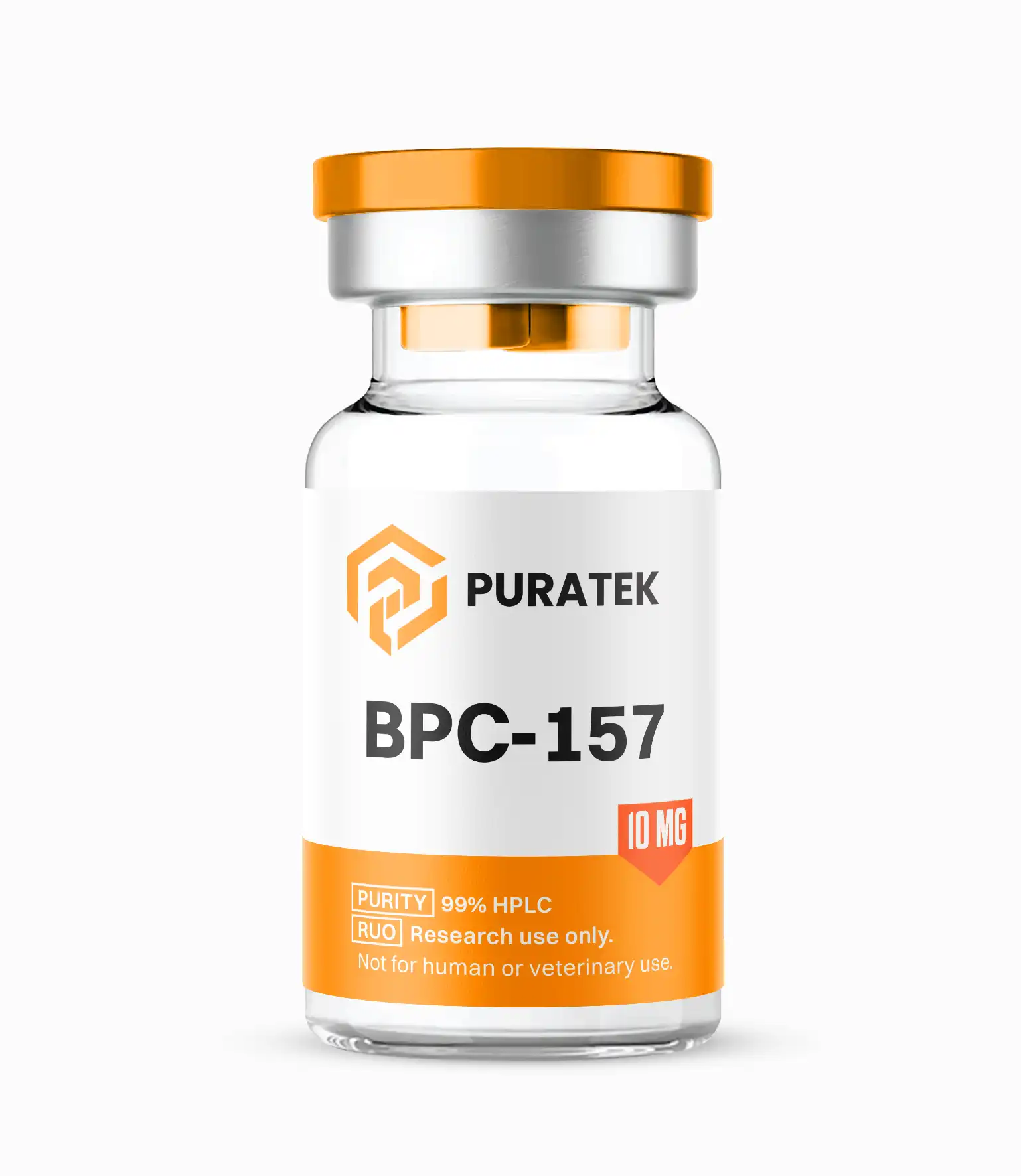
Reconstitution water options and resulting concentration
| Water added (mL) | Final concentration (mg/mL) | Equivalent per 0.1 mL (mg) | Equivalent per 0.01 mL (mg) |
|---|---|---|---|
| 1.0 mL | 10 mg/mL | 1.0 mg | 0.1 mg |
| 2.0 mL | 5 mg/mL | 0.5 mg | 0.05 mg |
| 3.0 mL | 3.33 mg/mL | 0.333 mg | 0.0333 mg |
| 4.0 mL | 2.5 mg/mL | 0.25 mg | 0.025 mg |
| 5.0 mL | 2 mg/mL | 0.2 mg | 0.02 mg |
How to use this like a “bpc 157 10mg reconstitution calculator”
Pick the water volume you plan to add (from the table), then use the concentration to convert between mg and mL for your injection plan. For example: if you reconstitute 10 mg with 2.0 mL water, you get 5 mg/mL—so:
- 1.0 mL contains 5 mg
- 0.5 mL contains 2.5 mg
- 0.2 mL contains 1.0 mg
Worked examples (so you can sanity-check your calculator)
Example A: You want a 1 mg dose
Case 1: If your solution is 5 mg/mL (10 mg into 2.0 mL), then:
Dose = Concentration × Volume → 1 mg = 5 mg/mL × Volume → Volume = 0.2 mL
Case 2: If your solution is 2.5 mg/mL (10 mg into 4.0 mL), then:
1 mg = 2.5 mg/mL × Volume → Volume = 0.4 mL
Example B: You draw 0.25 mL—what mg is that?
Case 1: At 2.5 mg/mL (4.0 mL water):
mg = 2.5 × 0.25 = 0.625 mg
Case 2: At 5 mg/mL (2.0 mL water):
mg = 5 × 0.25 = 1.25 mg
This is the lesson I learned the hard way when I reviewed reconstitution notes from peers: the same draw volume does not mean the same dose unless concentration is identical.
Real-world “gotchas” that affect your dosing accuracy
A calculator gives you the correct math, but execution determines accuracy. Here are the common issues I’ve seen when people go from “I know the formula” to “my dosing feels inconsistent.”
1) Syringe markings and measurement error
Small changes matter. If you’re aiming for fine dosing, choose a syringe with markings that let you measure accurately at the volume you plan to draw. In practice, measuring 0.02 mL repeatedly is harder than measuring 0.2 mL accurately—so your chosen water volume can indirectly improve precision.
2) Incomplete mixing assumptions
Using an appropriate mixing technique reduces concentration gradients. If your solution isn’t uniform, the “mg per mL” relationship becomes unreliable in the short term.
3) Dead space and needle/syringe retention
Some liquid remains in the needle and syringe. If you consistently under-dispense, your true injected mg can be lower than your intended mg. This doesn’t break the math, but it does affect outcomes.
4) Rounding in the calculator workflow
Values like 3.33 mg/mL (from 10 mg into 3.0 mL) lead to fractional mg. If your workflow rounds too aggressively, dose drift happens. If you want cleaner math, consider a water volume that yields a simple mg/mL ratio (2.0 mL → 5 mg/mL, 4.0 mL → 2.5 mg/mL, etc.).
Choosing your reconstitution volume: a decision framework
There’s no single “correct” water amount for every user. In my experience advising on dosage math, the best choice is the one that makes your planned injection volume measurable with low error.
A practical way to choose
- If you need smaller mg increments: choose a higher water volume (lower mg/mL), so your injection volume changes are more granular.
- If you prefer easier measurement: choose a lower water volume (higher mg/mL) so your injection volumes are larger and easier to draw consistently.
- If you care about clean arithmetic: avoid totals that produce awkward mg/mL decimals unless you’re comfortable rounding.
FAQ
How do I calculate the amount of water for a bpc 157 10mg reconstitution calculator?
You start by deciding the final concentration you want. Then use Water (mL) = Total peptide (mg) ÷ Desired concentration (mg/mL). For 10 mg, once you pick the water volume, concentration follows automatically: Concentration = 10 ÷ Water.
If I reconstitute 10 mg with 2.0 mL water, what is the dose per 0.1 mL?
2.0 mL gives 5 mg/mL. Since 0.1 mL is one-tenth of 1 mL, 0.1 mL contains 0.5 mg.
What reconstitution volume makes dosing easiest to measure?
In practice, the “easiest” volume is the one that makes your planned injection volume land where your syringe markings are most precise for you. Many people find 2.0–4.0 mL for 10 mg yields manageable injection volumes and cleaner concentration math (5 mg/mL at 2.0 mL, 2.5 mg/mL at 4.0 mL).
Conclusion: next step
The bpc 157 10mg reconstitution calculator is only as useful as your choice of water volume—and then your consistency when measuring injection volume. Use the equation mg/mL = 10 ÷ water (mL), then convert your target mg dose to mL using mL = mg ÷ (mg/mL).
Actionable next step: Pick the water amount you’ll use (e.g., 2.0 mL or 4.0 mL), write down the resulting concentration (mg/mL), and then create a quick personal dosing conversion chart for the injection volumes you plan to draw—so you can cross-check every dose before you inject.
Discussion